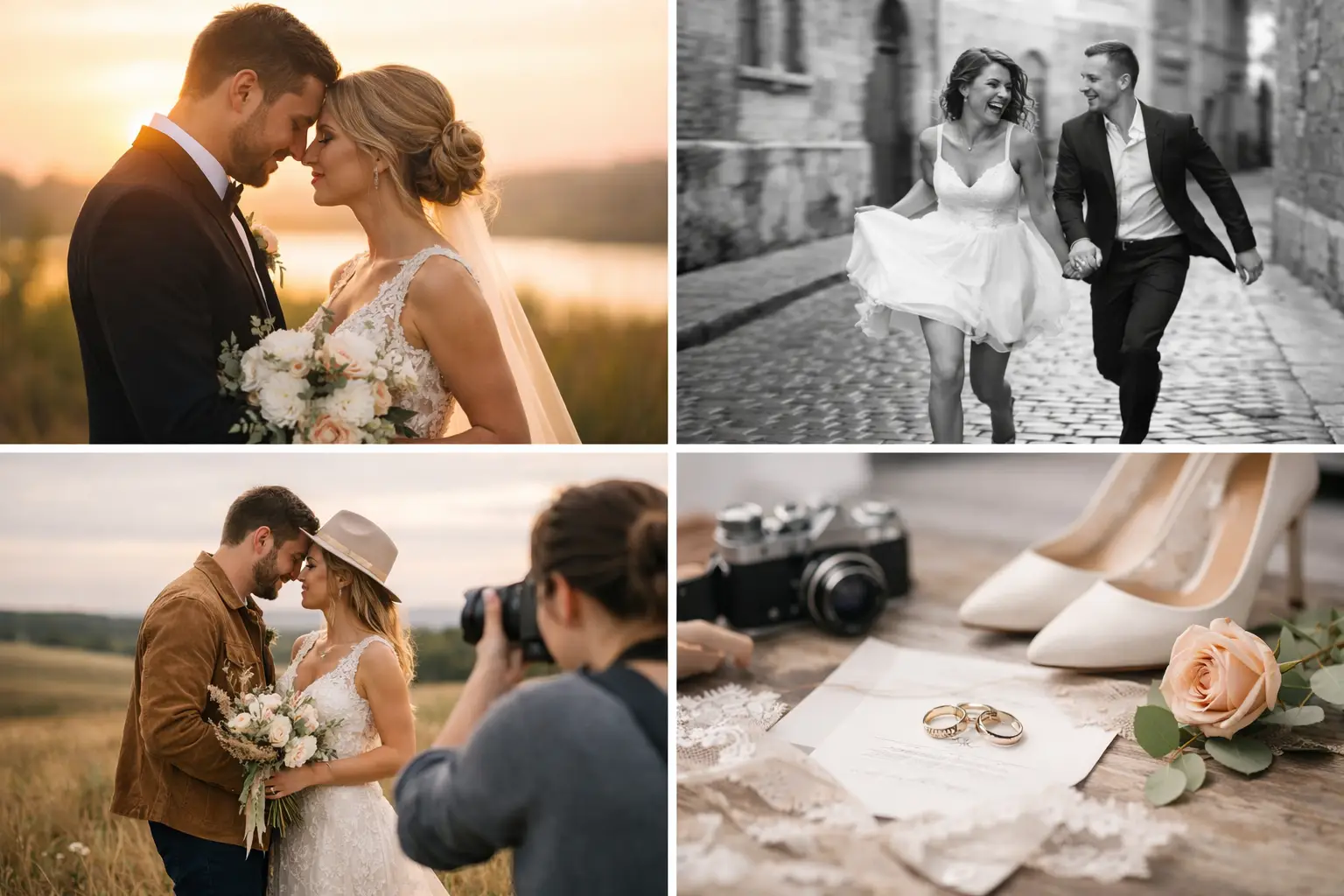
You can have the dream venue, extraordinary florals, and a beautifully tailored timeline, but if your photography style is not aligned with your vision, the final gallery can still feel slightly off. Different wedding photography styles do more than change how your images look – they shape how your wedding day is observed, directed, and remembered.
For couples planning a refined celebration, this choice matters. The right style should preserve the atmosphere you worked so carefully to create while still making room for emotion, movement, and the people who matter most. It is not simply about choosing photos you like on a screen. It is about choosing the lens through which your story will be told.
Why different wedding photography styles matter
Wedding photography is often discussed as if it were one category, but in reality, style influences everything from posing to lighting to the pace of the day. Some photographers are highly directive, creating polished compositions with a fashion-forward sensibility. Others work quietly in the background, documenting events with minimal interference. Most luxury couples are not looking for one extreme or the other. They want imagery that feels intentional, elevated, and emotionally true.
That is why understanding style before booking is so useful. A gallery can be beautiful and still not be right for you. If you are drawn to architecture, couture details, and artful portraiture, a purely candid approach may feel too loose. If you care most about spontaneous emotion and natural interaction, an overly posed style may feel disconnected from the experience itself.
Editorial wedding photography
Editorial wedding photography is polished, composed, and visually sophisticated. It often takes inspiration from fashion magazines, luxury campaigns, and fine art imagery. The emphasis is on clean lines, flattering direction, elevated styling, and a strong awareness of setting.
This style tends to shine in weddings where design is a major part of the story. Think statement florals, impeccable tablescapes, architecturally striking venues, or a wardrobe with a true fashion point of view. Editorial imagery gives those elements room to breathe. It can make a wedding feel cinematic and timeless rather than merely recorded.
The trade-off is that editorial work typically requires more direction. That does not mean the day feels stiff, but it does mean your photographer may guide posture, placement, and movement with more precision. For couples who love a polished result, that can be a gift. For couples who want almost no interruption, it may feel too hands-on unless balanced with another approach.
Documentary wedding photography
Documentary wedding photography, sometimes called photojournalistic coverage, focuses on real moments as they unfold. Rather than building each frame, the photographer observes and anticipates. The goal is honest storytelling – the teary breath before the ceremony, the way your father reaches for your hand, the laughter that ripples through dinner when no one is looking at the camera.
This style is often deeply emotive because it preserves the day as it actually felt. The images can carry a sense of movement and memory that is difficult to stage. For intimate weddings, multi-day destination events, or celebrations where connection is at the center, documentary coverage can be incredibly powerful.
The nuance is that documentary does not always deliver the same level of visual control as a more editorial approach. Lighting conditions, busy backgrounds, and fast-moving moments can all affect the final look. In the best hands, that spontaneity feels artful rather than accidental, but couples should know that candid does not always mean pristine.
Fine art wedding photography
Fine art wedding photography is soft, luminous, and intentionally romantic. It often features gentle color, graceful composition, and an overall feeling of delicacy. This style is less about high-fashion sharpness and more about beauty with an ethereal edge.
It is especially beloved for garden weddings, European-inspired celebrations, and events with a light, layered design palette. Fine art imagery flatters florals, stationery, and elegant details beautifully. Skin tones often appear soft and creamy, and the mood leans timeless rather than trendy.
That said, fine art can mean different things depending on the photographer. For some, it refers primarily to editing. For others, it defines the entire shooting philosophy. If you love this look, pay attention to whether the full gallery maintains that same refinement in every lighting scenario, not just during portraits.
Traditional or classic wedding photography
Classic wedding photography is rooted in timeless portraiture and key family documentation. It prioritizes the essential images nearly every couple wants: the ceremony processional, family formals, first dance, and elegant portraits that will still feel relevant decades from now.
There is a reason this style endures. It is dependable, flattering, and often more straightforward than trend-driven approaches. For couples who value heritage, family significance, and a clean visual record of the day, classic photography offers reassurance.
The limitation is that classic coverage on its own may feel less immersive or emotionally layered than a style that also leans editorial or documentary. It captures what happened beautifully, but it may not always capture the atmosphere with the same depth unless the photographer intentionally brings that sensibility into the work.
Dark and moody wedding photography
Dark and moody photography is rich in contrast, depth, and dramatic tone. Blacks are deeper, highlights are more restrained, and the overall mood is often intimate, artistic, and slightly cinematic. In the right setting, it can be stunning.
This style pairs naturally with candlelit receptions, historic venues, dramatic interiors, and celebrations designed around texture and atmosphere. It can make an evening feel luxurious and evocative, especially when the design itself has depth and richness.
But style should always serve the setting. If your wedding is airy, coastal, or built around a soft neutral palette, a dark and moody treatment may feel disconnected from the day. This is one of the clearest examples of why matching the photography approach to the wedding aesthetic matters.
Light and airy wedding photography
Light and airy photography is bright, soft, and romantic. It emphasizes natural light, delicate tones, and an overall sense of freshness. This look has been popular for years because it feels joyful and flattering, especially in outdoor settings.
For spring and summer weddings, tented celebrations, and destination weekends with a breezy palette, this style can feel beautifully aligned. It creates a sense of openness and ease that many couples love.
Still, there is a difference between luminous and overexposed. The most elevated version of this style keeps detail in the dress, dimension in the background, and warmth in the skin tones. If every image feels washed out, it may not age as gracefully as a more balanced approach.
A blended approach is often the most luxurious
For many sophisticated couples, the answer is not choosing one of the different wedding photography styles in its purest form. It is finding a photographer who blends them with intention. That often means editorial direction during portraits, documentary observation during meaningful moments, and a timeless foundation running through the entire gallery.
This hybrid approach tends to create the most complete experience. You get the elegance of beautifully crafted imagery, the honesty of real emotion, and the confidence that the important family photographs will not be overlooked. It feels curated without feeling controlled.
Studios such as Lauren Ashley Studios often work in this space because luxury weddings rarely ask for just one visual language. A wedding day can hold quiet intimacy, architectural grandeur, high style, and joyful unpredictability all at once. The photography should be able to hold all of it.
How to choose between different wedding photography styles
Start with the feeling you want your gallery to carry. Not just beautiful, but beautiful in what way. Do you want it to feel polished and fashion-led, soft and romantic, emotionally unguarded, or deeply timeless? Your answer will usually point toward the right style faster than technical terms will.
Then look beyond highlight reels. Full galleries reveal how a photographer handles a dim reception, a busy family formal sequence, midday sun, and the quieter transitions in between. Consistency matters, especially for a wedding with many moving parts.
It also helps to think about your own comfort level. Some couples want clear guidance and feel their best with artful direction. Others relax when they can stay immersed in the day and forget the camera is there. Neither preference is better, but it should shape who you trust to document your celebration.
Finally, consider the wedding itself. A black-tie city wedding in a grand hotel may call for a different visual approach than an oceanside elopement or a candlelit estate dinner. The most compelling galleries feel cohesive because the photography style, setting, wardrobe, and design are all in conversation.
Your wedding photographs should feel like an extension of the experience, not a filter laid over it afterward. When style and story are aligned, the result is something far more lasting than a trend. It becomes a collection of images that still feels like you, only elevated by care, artistry, and the kind of beauty that never asks for attention twice.


