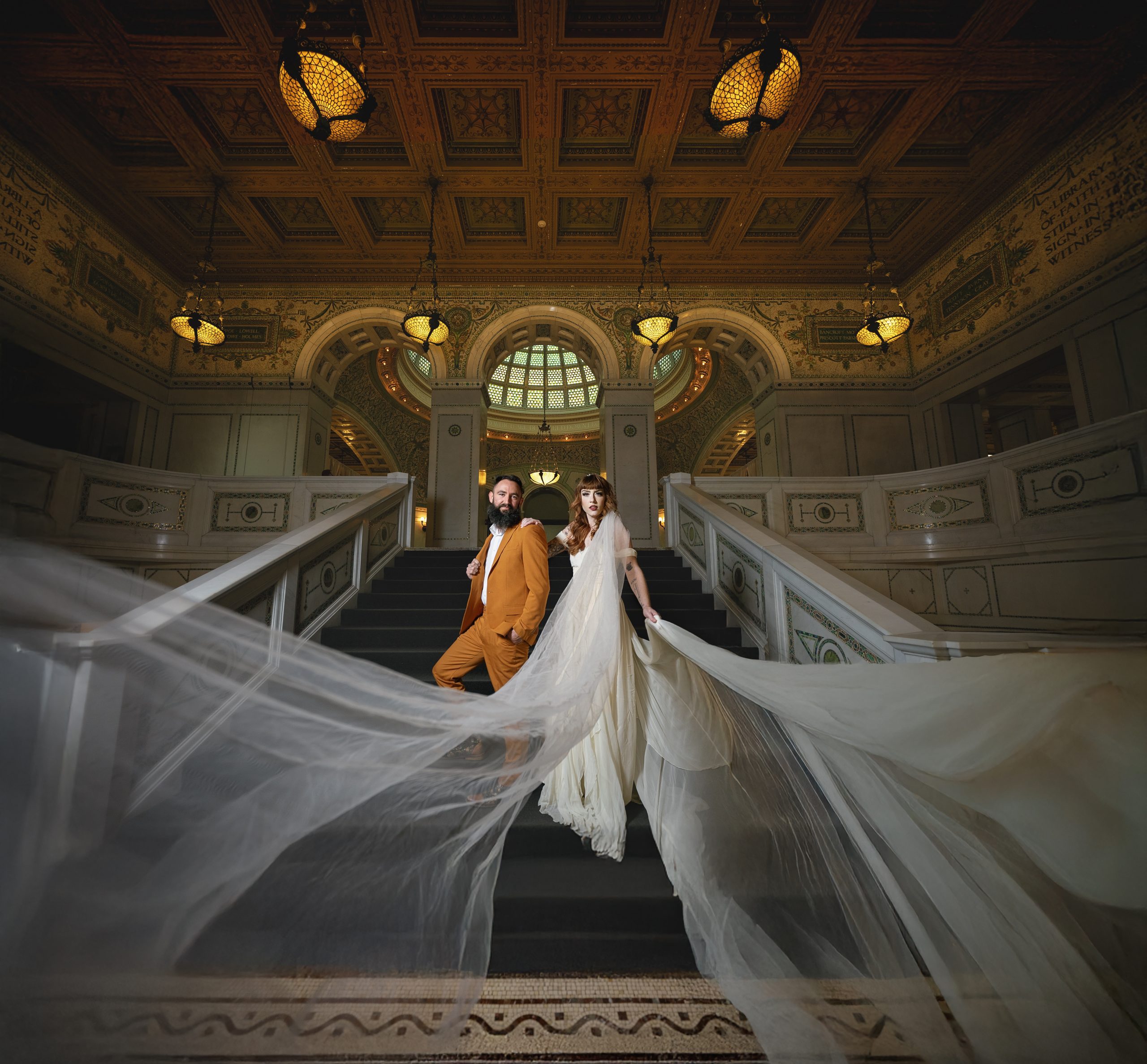
How to Create a Wedding Photography Timeline That Gives You Time to Actually Enjoy Your Day
The most beautiful wedding images rarely happen because every minute was packed perfectly. They happen because there was enough time to create them.
A strong wedding photography timeline protects the moments that matter, gives you room to enjoy your day, and gives your photography team enough time to create without constantly watching the clock.
When I build a wedding timeline, I do not start at the beginning of the day and work forward.
I start with two things: ceremony time and sunset.
From there, we work backward through the photography portion of the day, then forward through cocktail hour and the reception.
Start With Ceremony Time and Sunset
Before deciding when hair and makeup should finish or when your photographer should arrive, find out when the sun sets on your wedding date.
Light changes everything.
This becomes especially important for fall and winter weddings when sunset can happen surprisingly early. It also matters in downtown Chicago, where buildings can block direct sunlight well before the official sunset time.
Once we know the ceremony time and sunset, we can determine where the best portrait opportunities fall and whether a first look makes sense.
For example, if your ceremony begins at 6:00 p.m., I typically want you completely hidden away from arriving guests by 5:30 p.m.
That means all pre-ceremony portraits need to be finished before then.
From there, I work backward.
Protect Two Hours for Your Creative Portrait Session
Whenever possible, I like to protect approximately two hours for the creative or portrait portion of the wedding day.
That does not mean I am going to pose you nonstop for two hours.
It gives us room.
If we are traveling into the city, moving between locations, gathering the wedding party, fixing a veil, waiting for a busy Chicago sidewalk to clear, or taking five extra minutes because the light is incredible, we have the flexibility to do it.
If everything goes perfectly, amazing. We have extra time.
If something runs behind, we are not immediately sacrificing the photographs you were most excited about.
Decide Whether You Want a First Look
Ceremony time plays a huge role in deciding whether a first look makes sense.
If you have a later ceremony, especially when sunset happens close to or shortly after your ceremony, a first look can completely change the flow of your photography timeline.
It allows us to complete your creative session, wedding party photographs, and potentially family formals before the ceremony.
If you do not want a first look, that is completely fine.
We can photograph each of you separately beforehand. The bride can have portraits alone and with her wedding party, while the groom can have his own portraits and photographs with his side.
Then we intentionally build the couple’s creative session into the timeline after the ceremony.
There is no rule that says every couple needs a first look. The decision comes down to ceremony time, sunset, your priorities, and how you want the day to feel.
Wedding Timeline Example: Later Ceremony With a First Look
Let’s say your ceremony begins at 6:00 p.m.
Because guests will begin arriving beforehand, I want you hidden away by approximately 5:30 p.m.
Now we work backward.
A timeline could look like this:
11:30 a.m. Photography team arrives, dress, invitation suite, rings and details
12:00 p.m. Robes, hair and makeup, getting-ready photographs
12:45 p.m. Get into the dress
1:30 p.m. First look
2:00 p.m. Leave for the Wrigley Building
2:30 p.m. Arrive at the Wrigley Building, creative session and wedding party portraits
4:30 p.m. Wrap portraits and head back
4:45 p.m. Arrive back at the venue
5:00 p.m. Family formals
5:30 p.m. Hide away before guests arrive
6:00 p.m. Ceremony
6:30 p.m. Any missed family formals
6:30–7:30 p.m. Cocktail hour
7:30–9:00 p.m. Entrances, dinner, speeches and cake cutting
9:00–10:00 p.m. Dancing and reception coverage
This is why working backward matters.
If we started with getting ready and randomly decided that photography should begin at noon, we might discover later that there was not enough time for the Wrigley Building, wedding party portraits, family formals, travel, and your pre-ceremony break.
Instead, we protect the non-negotiable pieces first and build around them.
Always Hide Away 30 Minutes Before the Ceremony
One of the most overlooked pieces of a wedding photography timeline is the 30 minutes immediately before the ceremony.
I do not want my couples taking portraits until the moment guests begin walking in.
Ideally, you are completely finished with photographs and hidden away approximately 30 minutes before the ceremony begins.
This gives you time to touch up your makeup, drink water, use the restroom, fix your veil, and actually process what is about to happen.
It also keeps arriving guests from accidentally seeing you before the ceremony.
That 30-minute buffer is something I intentionally protect.
Give Getting Ready More Time Than You Think
Once the ceremony, portrait session, and pre-ceremony hideaway are protected, we continue working backward to determine when getting-ready photography should begin.
I typically want time to photograph your details before everyone starts getting dressed. This may include your invitation suite, rings, shoes, jewelry, perfume, vow books, heirlooms, bouquet, and wedding gown.
Then we move into robes, hair and makeup photographs, candids with your wedding party, and getting into the dress.
I generally allow around 45 minutes for getting into the gown, especially when there are buttons, corseting, a long veil, or emotional moments with parents and the wedding party.
Those moments are part of the story too.
I would rather have 10 extra minutes than have your mom buttoning your dress while someone is telling you that we needed to leave five minutes ago.
Keep Family Formals Organized
Family photographs are incredibly important, but without a plan they can quickly take over a timeline.
Before the wedding, we create a list of the family combinations that matter most. This allows us to move through portraits efficiently instead of deciding every grouping in the moment.
Depending on the size of your family and the number of combinations, I generally reserve approximately 20 to 30 minutes for family formals.
With a first look, we may complete some or all of these before the ceremony.
Without one, we usually photograph them immediately afterward.
If you have a large family, divorced parents, multiple grandparents, or specific family dynamics we need to be aware of, tell your photography team beforehand. We can structure the order intentionally and make the experience easier for everyone.
Wedding Timeline Example: Earlier Ceremony Without a First Look
Now let’s completely change the ceremony time.
Let’s say you want to keep the traditional moment of seeing each other for the first time as you walk down the aisle, and your ceremony begins at 2:00 p.m.
Because the ceremony is earlier, we have something the previous timeline did not have: a large window after the ceremony for portraits.
That could look like this:
12:00 p.m. Getting-ready photographs and details
12:45 p.m. Get into the dress
1:15 p.m. Separate bride and groom portraits
1:30 p.m. Hide away and prepare for ceremony
2:00 p.m. Ceremony
2:45 p.m. Family and wedding party formals
3:15 p.m. Leave for the reception venue or portrait location
3:45–5:00 p.m. Creative session with the couple
5:00–6:00 p.m. Cocktail hour
6:00–7:30 p.m. Entrances, dinner, speeches and cake cutting
7:30–8:30 p.m. Dancing
8:00 p.m. Brief sunset portraits, depending on the season
This is a perfect example of why I do not automatically recommend a first look for every couple.
With an earlier ceremony and enough time between the ceremony and cocktail hour, we can preserve the traditional aisle reveal while still having a generous creative session afterward.
Then Work Forward Through the Reception
Once we reach the ceremony on the timeline, I start working forward.
If the ceremony ends at 6:30 p.m., cocktail hour might run from 6:30 to 7:30 p.m.
From there, I generally reserve around 90 minutes for entrances, dinner, speeches, and cake cutting.
For weddings with more than approximately 300 guests, I prefer closer to two hours because dinner service naturally takes longer.
Then I like to protect at least one hour of open dancing.
That hour matters.
You want photographs once the dance floor actually gets going. If photography coverage ends 10 or 15 minutes after open dancing begins, we technically photographed the dance floor, but we did not get much time to document the party once everyone was out there.
Sunset Portraits Do Not Have to Be Your Entire Portrait Session
This is another misconception I see when couples build their own timelines.
You do not need to save every portrait for sunset.
In many cases, I would rather have a full creative session earlier and then pull you outside for 10 to 15 minutes around sunset.
That gives you completely different light without disappearing from your reception for an hour.
If sunset is at 8:00 p.m. and you are already dancing, we can watch the light, grab you at the right moment, create a handful of beautiful portraits, and get you right back to your guests.
Your photography team should be watching the light so you do not have to.
Build in Time for Travel
Travel time is not simply whatever Google Maps says.
For a Chicago wedding, we need to consider elevators, valet, loading the wedding party, finding parking, traffic, walking in formalwear, and actually getting everyone into position once we arrive.
If Google says a location is 20 minutes away, I am not building exactly 20 minutes into your wedding timeline.
The same applies to destination weddings. A location may look close on a resort map, but getting a wedding party across the property can take much longer than expected.
This is another reason I like having a generous creative window.
Your Timeline Should Protect the Experience
I do not believe in creating a wedding timeline where every five minutes is assigned to something.
Your timeline needs room for real life.
Hair and makeup can run late. Chicago traffic happens. Elevators take forever when an entire wedding party is trying to get downstairs. Your mom may cry when she sees you in your dress. Your grandfather may want one more photograph. Your veil may need to be fixed.
Those moments should not derail your wedding day.
That is why I would rather build a little more time into the photography schedule than spend your wedding rushing you from one moment to another.
The formula I use is simple:
Start with ceremony time and sunset.
Then work backward.
Protect your creative session. Decide whether a first look makes sense. Give yourself 30 minutes to hide away before the ceremony. Build in getting-ready photographs, family portraits, and travel.
Once we reach the ceremony, we work forward again.
Cocktail hour. Reception entrances. Dinner. Speeches. Cake cutting. Dancing. Sunset photographs when the light calls for them.
A beautiful wedding timeline gives us structure, but it should never make you feel like you are living your wedding day according to a stopwatch.
By the time your wedding arrives, I want the planning to be finished.
You should be able to experience your wedding. We will take care of telling the story.


