A candlelit first dance, a silk gown moving through a historic ballroom, the quiet squeeze of a parent’s hand before the ceremony – these are not moments you want documented in a generic way. The conversation around film vs digital wedding photos is really about the feeling you hope to return to years from now: luminous and nostalgic, crisp and true-to-life, or a thoughtful balance of both.
For a wedding with intention behind every detail, your photography medium deserves the same consideration as your venue, floral design, and wardrobe. Film and digital each create beautiful imagery, but they do so with different rhythms, visual signatures, and practical considerations.
Film vs Digital Wedding Photos: The Visual Difference
Film has a softness that is difficult to imitate completely. Its highlights tend to roll off gently, preserving the glow of a window-lit bridal suite or a sun-washed terrace without feeling harsh. Color can feel creamy, dimensional, and slightly interpretive, with skin tones that often carry a warmth and romance couples associate with heirloom photographs.
Grain is part of film’s character, too. Rather than appearing like visual noise, it can lend an image texture and intimacy. A black-and-white film frame of your ceremony kiss may feel less like a record of one second and more like a memory you can hold.
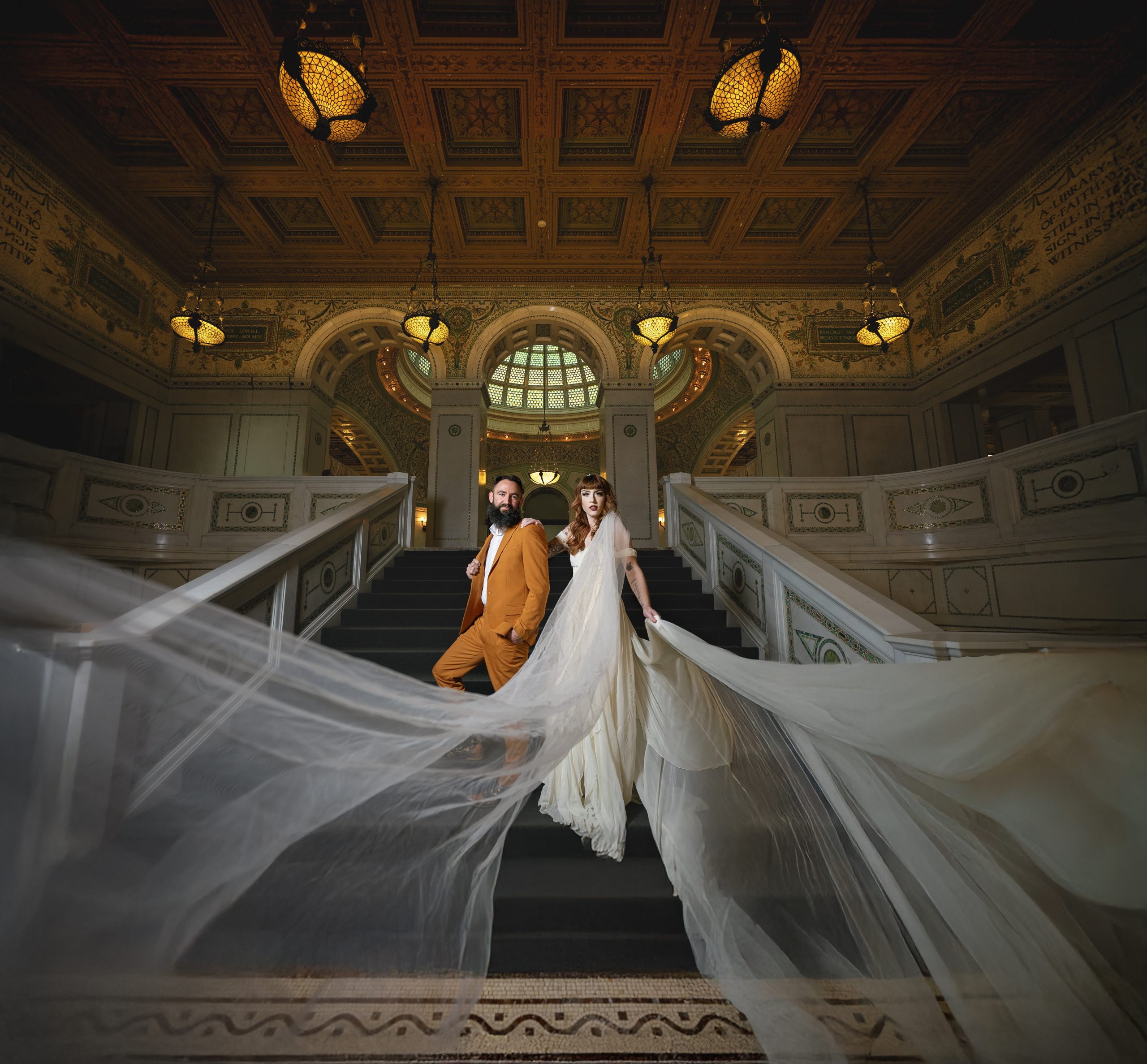
Digital photography is exceptionally versatile and beautifully precise. It offers remarkable clarity, especially in low light, and allows a photographer to work quickly as the day unfolds. Digital files can retain delicate detail in a beaded gown, richly layered reception tablescape, or the architecture of a grand Chicago landmark. The finished edit can be light and airy, richly editorial, softly romantic, or more true to color depending on the artistic approach.
Neither medium is inherently more beautiful. Film introduces a distinct point of view, while digital creates breadth, responsiveness, and consistency. The better question is which visual language feels most like your celebration.
The Experience Behind the Camera
The medium shapes more than the final gallery. It also influences how photographs are made throughout the day.
With film, every frame is considered. A photographer works with a finite number of exposures on each roll and makes deliberate choices about composition, light, and timing. This can create a calm, intentional pace, particularly during portraits. For couples who value an unhurried editorial experience, there is something lovely about pausing for a frame that has been carefully observed rather than rapidly captured.
That said, film does not mean stiff or overly posed. An experienced photographer can document movement, laughter, and beautifully imperfect in-between moments on film. But the process asks for favorable light, practiced timing, and a little more patience from everyone involved.
Digital is particularly well suited to fast-moving wedding moments. It gives your photographer the freedom to photograph generously during a packed dance floor, an emotional tea ceremony, or an exit filled with confetti and motion. When light changes quickly, digital equipment can adapt in seconds. It also allows your team to confirm key technical details in real time, offering welcome reassurance during once-only moments.
For many luxury weddings, the most graceful experience is not an either-or choice. It is a team and process designed to move between quiet intention and joyful spontaneity without making the couple feel managed by the camera.
Light, Weather, and the Realities of a Wedding Day
Film is at its most poetic in soft natural light: an overcast garden ceremony, window-lit getting-ready moments, or portraits at the edge of sunset. It can also be extraordinary with flash in the hands of someone who understands how to shape artificial light. Still, it is less forgiving when conditions are dim, mixed, or changing rapidly.
Consider a November reception in a candlelit room, for example. The atmosphere may be breathtaking in person, but photographing it entirely on film requires specialized expertise, intentional lighting, and acceptance that certain frames may be moodier or grainier. That is not a flaw. It is part of the medium’s honest response to light. It simply needs to align with your expectations.
Digital performs reliably across a wider range of conditions. A skilled photographer can preserve the drama of low light while keeping faces clear and colors balanced. For destination celebrations with unpredictable weather, late-night events, or venues where flash is limited, digital coverage provides flexibility without compromising the atmosphere you worked so carefully to create.
If you are drawn to film, do not let logistics discourage you automatically. Instead, speak openly with your photographer about your venue, ceremony time, season, and reception lighting. The most beautiful decisions are informed ones.
What About Color, Skin Tones, and Editing?
Couples often choose film because they are drawn to its palette: gentle greens, flattering skin tones, luminous whites, and colors that feel slightly softened by time. Yet film stocks vary dramatically. Some render greens cool and muted; others make blues sing or lend warmth to neutral interiors. Film is not one preset or one look.
Digital color is equally dependent on the photographer’s eye. The camera captures a highly adaptable file, and editing determines much of its final mood. A refined digital gallery should not chase short-lived trends or rely on heavy filters. It should honor the actual atmosphere of your day while shaping it into a cohesive visual story.
When reviewing a photographer’s work, look beyond a single sunlit portrait. Ask whether their galleries handle a range of skin tones with care. Notice how white gowns appear in bright daylight, whether black tuxedos retain detail, and how candlelight feels after dark. The goal is not perfection in every pixel. It is imagery that feels flattering, consistent, and emotionally true.
A Hybrid Approach Offers the Best of Both
For couples who love the unmistakable romance of film but want comprehensive coverage, hybrid photography can be an elegant answer. In this approach, a photographer uses both film and digital throughout the wedding day, choosing each medium for the moments and conditions where it serves the story best.
Film might be used for details, portraits, and the quiet anticipation before the ceremony. Digital may take the lead during a dark reception, a fast processional, or a packed dance floor where dozens of fleeting interactions deserve to be preserved. The result can feel cohesive when the photographer has a clear editing philosophy and understands how to bring the two mediums together.
A hybrid collection is not about adding film for novelty. It is about using it with purpose. The most compelling galleries do not announce where one format ends and another begins. They simply feel romantic, refined, and alive.
Questions to Ask Before You Decide
Before committing to film, digital, or a hybrid approach, ask to see complete wedding galleries in lighting similar to your own. A portfolio should show more than perfect weather and styled portraits. You deserve to see ceremony coverage, family photographs, receptions, and the quieter moments that make a wedding personal.
You may also want to ask how the photographer manages film processing, whether film images are scanned and edited to match the broader gallery, and what happens if weather or venue restrictions create challenging lighting. If you are planning a destination wedding, ask how equipment backup, airport travel, and local conditions are handled. These are not unromantic questions. They are part of creating an experience that feels effortless when the day arrives.
Finally, trust your response to the work. If film makes you feel transported, that feeling matters. If you love the clarity and range of digital imagery, that is equally valid. Your wedding photographs should reflect your taste, not a passing rule about what is most luxurious.
The photographs that become part of your life will not be the ones that followed a trend most closely. They will be the images that bring you back to the room: the music, the light, the people who traveled far to celebrate you, and the unmistakable feeling of having chosen each other.


