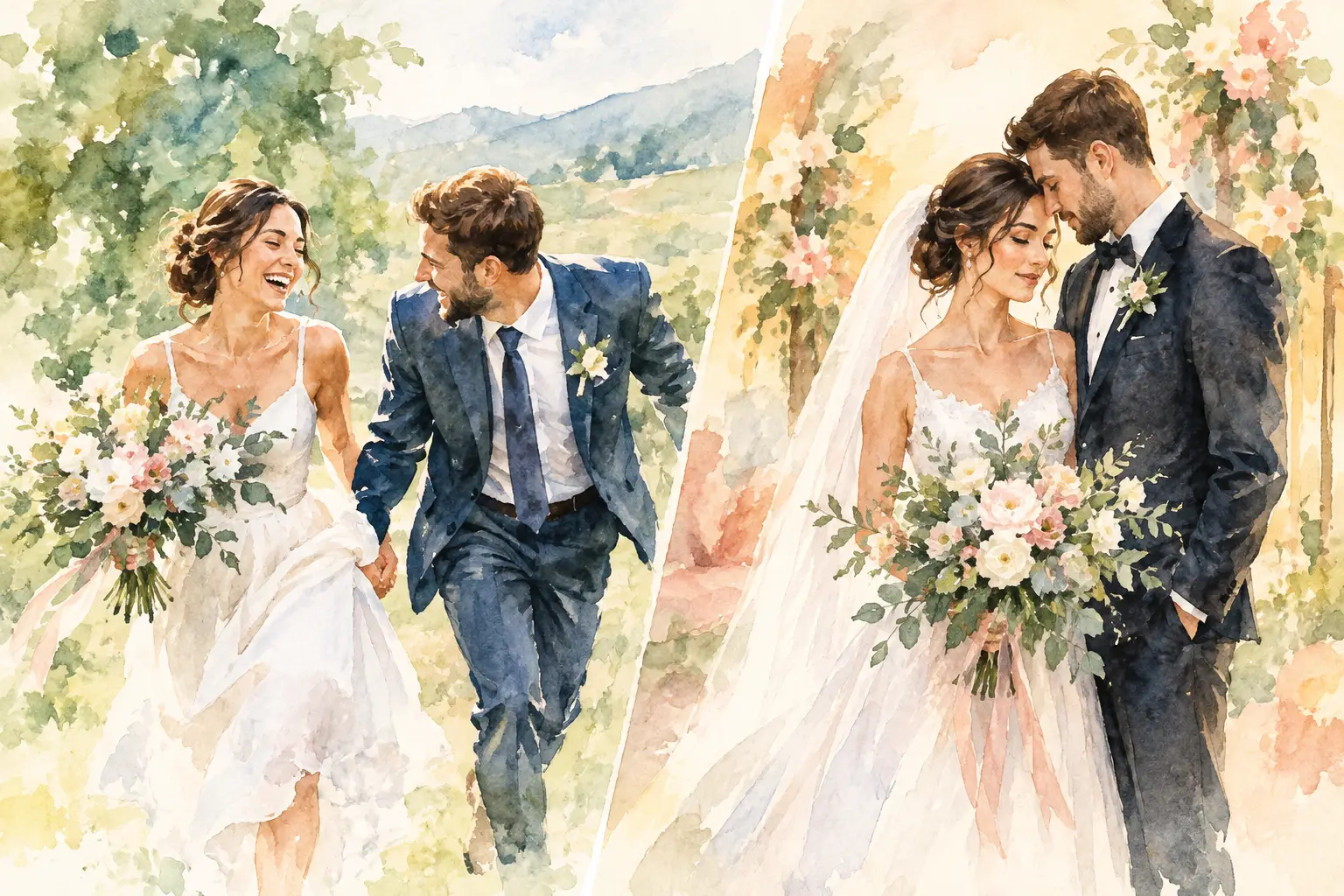
The question of candid vs posed wedding photography is rarely about choosing one style over the other. It is about deciding how you want your wedding day to feel when you return to it years from now: the hush before you walk down the aisle, the grandeur of your carefully chosen venue, your grandmother’s hand resting on yours, and the portrait that becomes part of your home.
For couples planning a refined celebration, the most meaningful galleries hold both. They preserve the honest, unscripted moments that cannot be recreated while making room for artfully directed images that honor the beauty of the day you designed so intentionally.
What Candid Wedding Photography Captures
Candid photography is rooted in observation. Rather than asking you to repeat a laugh or look toward the camera, your photographer watches for the gestures unfolding naturally: your partner’s expression as you begin your vows, the joyful chaos of the dance floor, or a quiet breath between portraits.
These images often become emotional anchors in a wedding gallery because they carry movement, surprise, and real connection. A candid photograph may show the exact way your father looked at you during the first dance or the laughter shared with friends just before dinner begins. Those moments are not polished because they were planned. They are beautiful because they were true.
For a luxury wedding, candid work also captures the atmosphere you have created. The champagne being poured beneath candlelight, guests arriving through the doors of a historic Chicago venue, and the soft conversation around an elegantly set table all help tell the fuller story. The setting is not simply a backdrop. It is part of the feeling.
There is, however, a trade-off. Purely candid coverage places less control over posture, composition, and timing. A beautiful moment can unfold in imperfect light or against a distracting background. An experienced photographer anticipates these variables, but spontaneity will always retain a little of its beautiful unpredictability.
The Beauty of Posed Wedding Portraits
Posed photography is sometimes misunderstood as stiff or overly formal. At its best, it is neither. It is gentle direction shaped by an understanding of light, architecture, body language, and the way two people naturally move together.
A guided portrait session gives you space to slow down. Away from the pace of cocktail hour and the attention of your guests, you can take in the reality of being newly married. Your photographer may adjust the placement of your hands, invite you to lean in, or guide you toward a window where the light is especially flattering. The result can feel editorial and composed without losing warmth.
These are often the images that showcase the details you selected with care: the silhouette of your gown, the craftsmanship of your suit, the florals, and the visual character of your venue. They are the photographs that translate beautifully into framed art, heirloom albums, and the first image family and friends see when they enter your home.
Family portraits also belong in this category, though they need not feel like a production. With thoughtful planning and clear direction, they can be efficient, elegant, and genuinely relaxed. The key is creating a portrait list that reflects the people who matter most, then allowing enough time for everyone to be present rather than rushed.
Candid vs Posed Wedding Photography: The Right Balance
The most compelling wedding photography usually lives between documentary instinct and editorial intention. Your gallery should not feel like a sequence of formal poses, nor should it leave out the iconic images you hoped to have forever.
Consider the moments where each approach naturally shines. Getting ready is rich with candid possibility: a note exchanged, friends helping with final details, a parent seeing you dressed for the first time. Yet it also benefits from a few composed frames of your attire, accessories, and surroundings before the room becomes lively.
During the ceremony, discretion matters. The strongest images are usually observed rather than directed, allowing you and your guests to remain fully immersed. Portrait time, on the other hand, is where intentional guidance brings the greatest value. A calm, confident team can create a varied collection of elegant images while leaving room for unscripted laughter and quiet connection between prompts.
At the reception, the balance shifts again. Your entrance, speeches, and first dance call for an unobtrusive documentary approach. But a few artfully arranged photographs of the reception space before guests enter ensure that the design and ambience are documented exactly as they were envisioned.
How to Choose the Style That Feels Like You
Start by looking beyond individual images and paying attention to how a full wedding gallery makes you feel. Are you drawn to photographs with motion and imperfect, lived-in energy? Do you imagine larger-than-life portraits against dramatic architecture? Most couples find themselves drawn to both, but their preferences may influence how the wedding-day timeline is built.
If you value candid imagery most, prioritize generous breathing room in your schedule. A rushed day creates less opportunity for natural connection. Consider a first look if it allows you to complete portraits before the ceremony, then be more available to your guests during cocktail hour. Build in a few unscheduled minutes after getting dressed, before dinner, and around sunset. These pauses often produce the photographs that feel most personal.
If polished portraits are central to your vision, give them the time they deserve. Fifteen hurried minutes in harsh midday light will not create the same result as a thoughtfully planned portrait window with consideration for travel, venue access, and the evening light. This does not mean spending hours away from your celebration. It means choosing quality over chaos and trusting a team that can guide the experience with ease.
Your comfort in front of the camera matters, too. Couples who say they are awkward often do not need less direction. They need kind, specific direction that feels natural. A photographer who knows when to step back and when to offer a simple prompt can make the experience feel surprisingly effortless.
Questions to Ask Your Photographer
Before booking, ask to see complete wedding galleries rather than only highlight images. This reveals how a photographer handles changing light, family formals, quiet in-between moments, and the high-energy reception. It also shows whether their candid work feels observant and intentional, and whether their posed portraits remain relaxed and flattering.
Ask how they approach portrait direction, how much time they recommend for family photographs, and how they work alongside a planner and videography team. For destination celebrations or architecturally significant venues, ask how they plan around travel, weather, guest movement, and location restrictions. The answers should make you feel cared for, not managed.
At Lauren Ashley Studios, the goal is never to pull you out of your own wedding. It is to preserve its romance, artistry, and soul while offering the poised direction that lets you feel confident in every frame.
Let Your Wedding Be Felt, Not Just Seen
The photographs you treasure most may not be the ones you expect. They may be the striking portrait where every detail falls into place, or the fleeting image of your hands finding each other beneath the table during dinner. Give your day room for both. When your photography honors the design and the emotion, your gallery becomes more than a beautiful record of what happened. It becomes a return to how it felt.


